
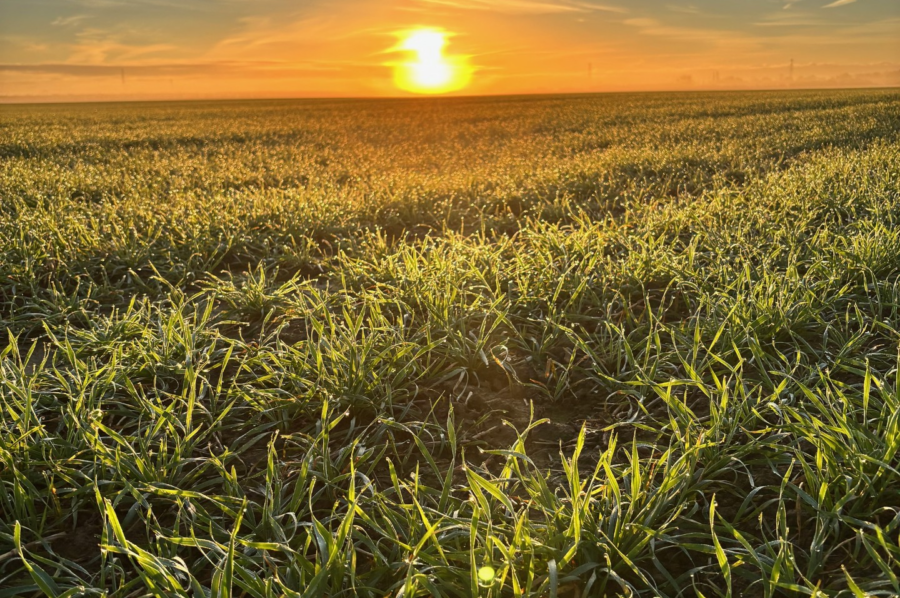
by Simon Roberts in February's South East Farmer
Before we know it, crops will start to grow again and fertiliser spreaders will be back on. Compared to last year, we will have crops well established and will need to assess their early nitrogen requirement.
Before any nitrogen gets applied, it is important to calculate or measure how much nitrogen is likely to be left in the soil and available to the crop. Soil type, previous crop, rainfall and previous manure applications will influence the soil nitrogen supply (SNS) so each farm and field will be different.
Where possible, it is worth getting some fields tested to 90cm to measure their soil mineral nitrogen (SMN) levels to help determine what the SNS is. There is often funding through local water companies for this service. This helps to determine how much nitrogen is required for the spring. If the SNS index is low, then a full nitrogen programme will be required, with early applications likely to be needed. Where the SNS level is high, however, we will be able to cut back nitrogen applications this spring.
Growers are strongly recommended to get their fertiliser spreaders calibrated before applying any fertiliser to ensure an even spread. Most products will spread slightly differently and therefore calibration is essential to ensure a uniform spread. A coefficient of variation over 20% will lead to visible striping in crops and a likely yield decrease. The financial implications of this can be huge, especially where milling wheat is being grown and protein levels are compromised.
Wheat after oats, second wheats and crops after maize will likely have a low SNS and should be a priority for early nitrogen application. Wheat after a legume or oilseed rape will likely have a higher SNS and should not be as high priority for early nitrogen unless the crop is noticeably behind.
Early nitrogen applications are designed to aid tiller survival, increase rooting and build biomass, and therefore late drilled and backward crops should be a priority. Any early drilled crops that have a high tiller count won’t want nitrogen too early. Creating a large biomass on early drilled crops will only lead to higher disease pressure, especially septoria tritici, as well as a greater risk of lodging.
Tiller survival is also vital for winter barley to ensure enough ears/m2 to optimise yield potential. Winter barley should therefore be targeted early for nitrogen applications to ensure yield potential is maintained.
Nitrogen applications on oilseed rape will depend on canopy size. Earlier drilled crops with large canopies are likely to be carrying significant nitrogen within the crop and may not need pushing too early. Later drilled crops will need encouraging to increase biomass and get the crop to a green area index of 3.5 by yellow bud (GS59). This will be especially important where pigeon damage is evident. Where cabbage stem flea beetle larvae are a concern, early nitrogen will help increase stem size and strength and reduce potential damage this spring.