by Brett Pointing in August’s edition of South East Farmer
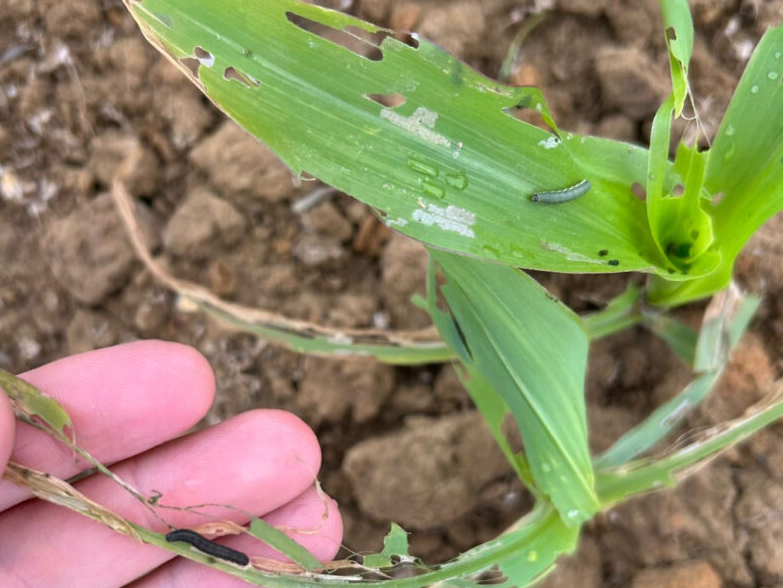
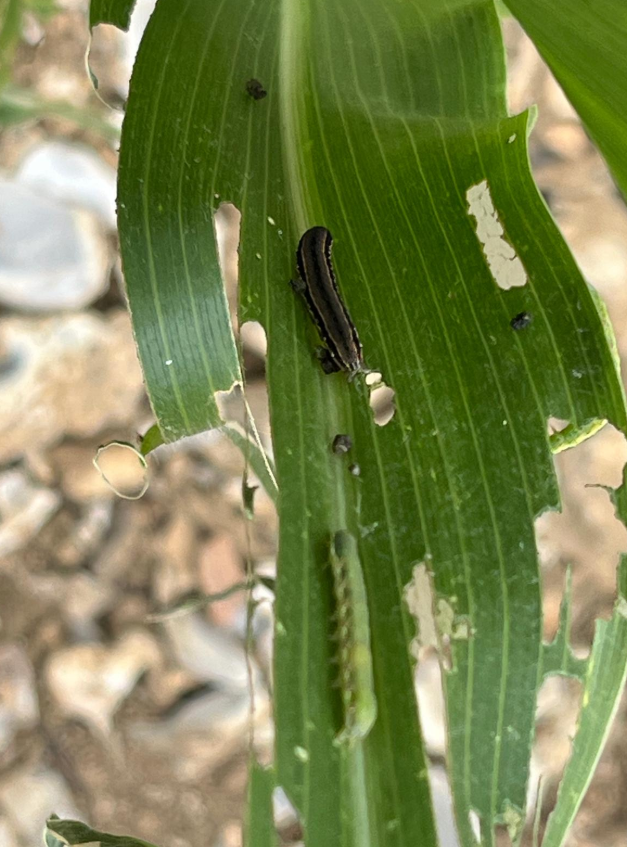
Beet armyworm (Spodoptera exigua) is not a new pest in the UK, but this season’s damage is the most severe and widespread recorded to date. Over the past few weeks, it has been found along the south coast, causing significant damage to smaller maize crops at around the eight-leaf stage. This migratory moth arrives from the continent, and its caterpillars feed on a wide range of crops including maize, beet, brassicas and vegetables.
When they were first found in the field, the main concern was that they could be fall armyworm (Spodoptera frugiperda), a notifiable pest that would pose a serious threat if it became established in the UK. Fall armyworm causes millions of dollars’ worth of damage worldwide and feeds on around 80 plant species.
It can be difficult to distinguish between beet armyworm and fall armyworm because they look similar, so sending samples to the Animal and Plant Health Agency (APHA) is the best way to confirm identification.
APHA regards beet armyworm as a regular migrant that does not usually survive UK winters, so it is not considered a major concern. However, warmer summers and winters could increase the frequency of future incursions.
Young larvae produce characteristic ‘window pane’ feeding, grazing one surface of the leaf before creating progressively larger holes. Older caterpillars can strip leaves back to the midrib and, in severe infestations, can completely defoliate young plants.
The beet armyworm’s life cycle is rapid, typically completing in between 24 and 40 days, depending on temperature. Females lay egg masses – often fuzzy, greenish-white clusters – on the undersides of leaves. Eggs hatch in a few days, and larvae progress through five instars before pupating in shallow, soil-lined chambers.
Multiple generations per year are common in warm climates. This fast turnover, combined with a remarkably broad host range, underpins the insect’s economic importance.
Because beet armyworm has not previously been a major issue in UK field crops, its potential severity and economic impact remain uncertain. Clear treatment thresholds will hopefully be established in the near future. Current control options include the contact-acting cypermethrin product Cythrin 500 EC, which is approved for caterpillar control in forage maize, and chlorantraniliprole-based Coragen, which is more expensive but offers both contact and systemic activity.