
by Jonathan James in September’s Edition of South East Farmer
In recent years it has become common to be cutting wheat in July, but having most farms finish combining all cereals by the end of July is certainly a first. One benefit of an early harvest is that farmers will have plenty of time get oilseed rape established in optimum conditions. Moisture, though, is going to be the biggest factor for oilseed rape establishment this year, and it’s important not to rush into establishing crops poorly at the first sign of rain.
Across most of southern England, prolonged dry weather has left soils carrying exceptionally high soil moisture deficits. Next to no volunteer cereals or oilseed rape plants have established in stubbles since harvest, so establishing next year’s crops is going to be extremely challenging.
Calendar date should not be a driving factor when it comes to oilseed rape, with many of the better yields in the south in recent years coming from later-sown crops. As ever, success will likely depend on conditions at the time of drilling.
This year conserving moisture will likely be key, be this through minimal soil disturbance, retaining surface residues where appropriate, and waiting for sufficient rainfall to ensure rapid, even emergence. A crop that emerges quickly and uniformly has the best chance of outgrowing early cabbage stem flea beetle (CSFB) pressure and developing the root system needed to withstand what may become another challenging autumn.
It is likely that on many soils 25mm to 50mm of rain will be required before establishing oilseed rape successfully. This may well mean delaying drilling well into September to ensure cooler temperatures and hopefully some more rain.
While rainfall is desperately needed, growers should also keep one eye on soil temperature. Following one of the warmest and driest summers in recent years, soil temperatures remain well above average and are likely to stay elevated well into September.
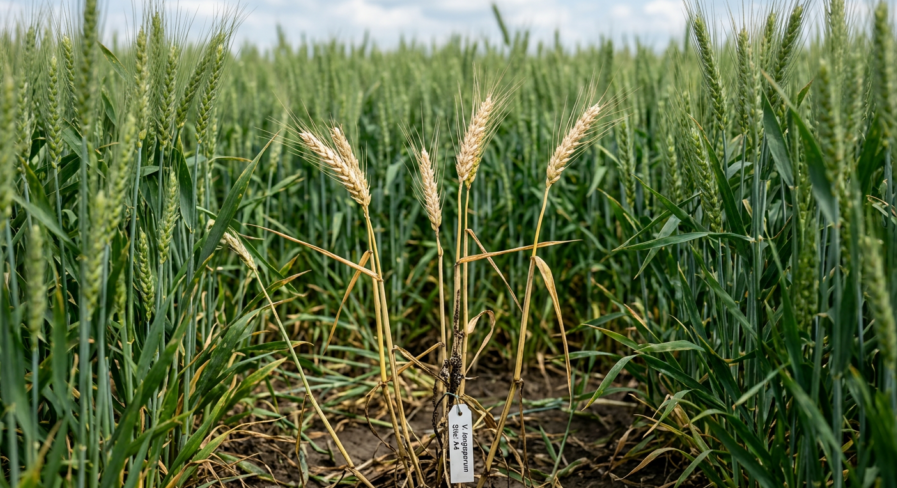
Warm soils will accelerate germination and emergence, but they also favour the development of several soil-borne pathogens, including Verticillium longisporum. Although infection occurs early in the season, symptoms are not expressed until the following summer at pod fill, when premature ripening can occur, leading to significantly reduced yields. Wide rotations and variety choice can help reduce Verticillium pressure.
Warmer conditions will likely also favour pests such as cabbage stem weevil, cabbage root fly and Sawfly. Whilst these pests are not usually as devastating as CSFB, they can still cause significant yield loss if left untreated.
Nutrition will play a major part in getting crops away, and getting adequate nitrogen and phosphate in the seedbed is essential. Organic manures often help deter CSFB and slugs as well as providing nutrition, so should be favoured over inorganic fertilisers.
These nutrients, however, can only be taken up when in solution, and with the lack of soil moisture available this is currently likely to be limited. Given the below average cereal yields seen across the board this summer, it is likely that soil mineral nitrogen levels are relatively high, and there may be a possibility to reduce the amount of nitrogen applied to seedbeds in some scenarios.